
Running a Sex Offender Check in St. Tammany Parish
Use the state registry filtered by St. Tammany Parish or by city, ZIP code, address, or name. No separate verified STPSO public list or current registration-counter page was located, so the statewide gateway is the documented public route. For a known person, compare the photograph and other public identifiers rather than relying on a name alone.
For neighborhood awareness, record the exact address, radius, and search date because registration updates can change results. STPSO or LSP, not public confrontation, is the correct route for suspected noncompliance or an apparent profile error.
Reading St. Tammany Registry Results Carefully
Tier is tied chiefly to statutory offense criteria and registration duties, not an individualized prediction. A conviction can come from another jurisdiction. Physical traits, vehicles, and addresses can change, which makes the profile’s update and verification data important.
An absent name does not prove no criminal history. Many crimes do not trigger registration, a record may be outside Louisiana, and spelling or date problems can defeat a search. Likewise, a profile’s compliant label concerns reported registry obligations, not every aspect of a person’s conduct.
Aliases require the same care. One profile may list several names for one registrant, while two people can share a common name. Compare the official photograph, public physical details, offense jurisdiction, and address. Do not announce an identity from a name match alone.
The Official St. Tammany Registry Gateway
The Louisiana State Police registry page supplies the official gateway and current use warning.
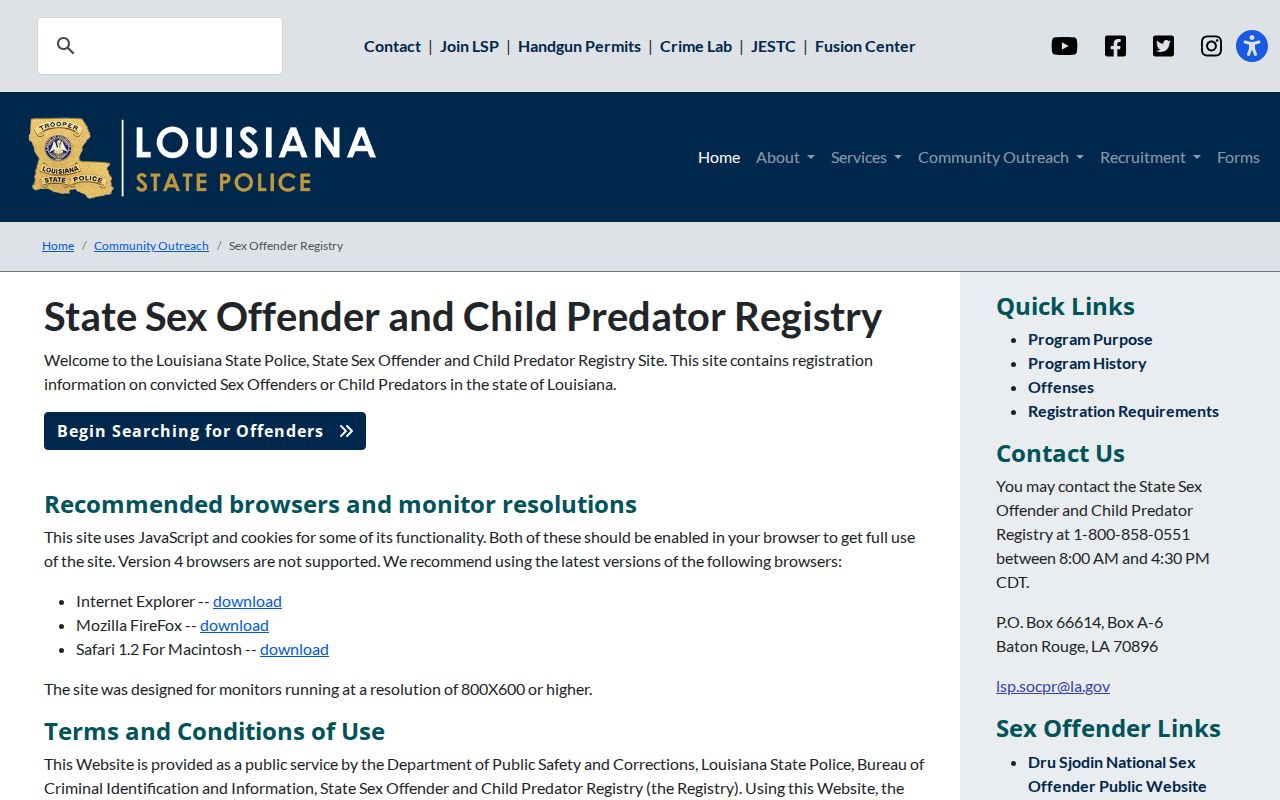
Begin there rather than with a copied list, and note any update date or vendor notice shown by the current interface.
Searching the Louisiana State Sex Offender and Child Predator Registry
Louisiana State Police BCII manages the statewide public service. The presentation can change, so read the live disclaimer and use only fields that the current official form displays.
- Open the LSP gateway, read the current conditions, and enter the official search.
- Search a known person by first and last name, or use city, ZIP, parish, address, and an offered radius for geography.
- Compare the result photograph and public identifiers carefully. Names and aliases can collide.
- Open the profile; distinguish residence and other address types, then read offense, jurisdiction, conviction date, tier, duration, and status exactly as shown.
| Field Label | Type | Required | Notes |
|---|---|---|---|
| Last Name | Text | Conditional | Principal name field |
| First Name | Text | No | Narrows name search |
| City / ZIP | Text or dropdown | No | Use Slidell, Mandeville, Covington, or a five-digit ZIP |
| Parish | Dropdown | No | Select St. Tammany |
| Address / Radius | Text and dropdown | Conditional | Verify currently offered distances |
NSOPW Adds a Cross-State St. Tammany Search
Use the U.S. Department of Justice National Sex Offender Public Website when an address, conviction, or move may cross Louisiana’s border. The official NSOPW form aggregates participating jurisdictions and routes users back to source registries.
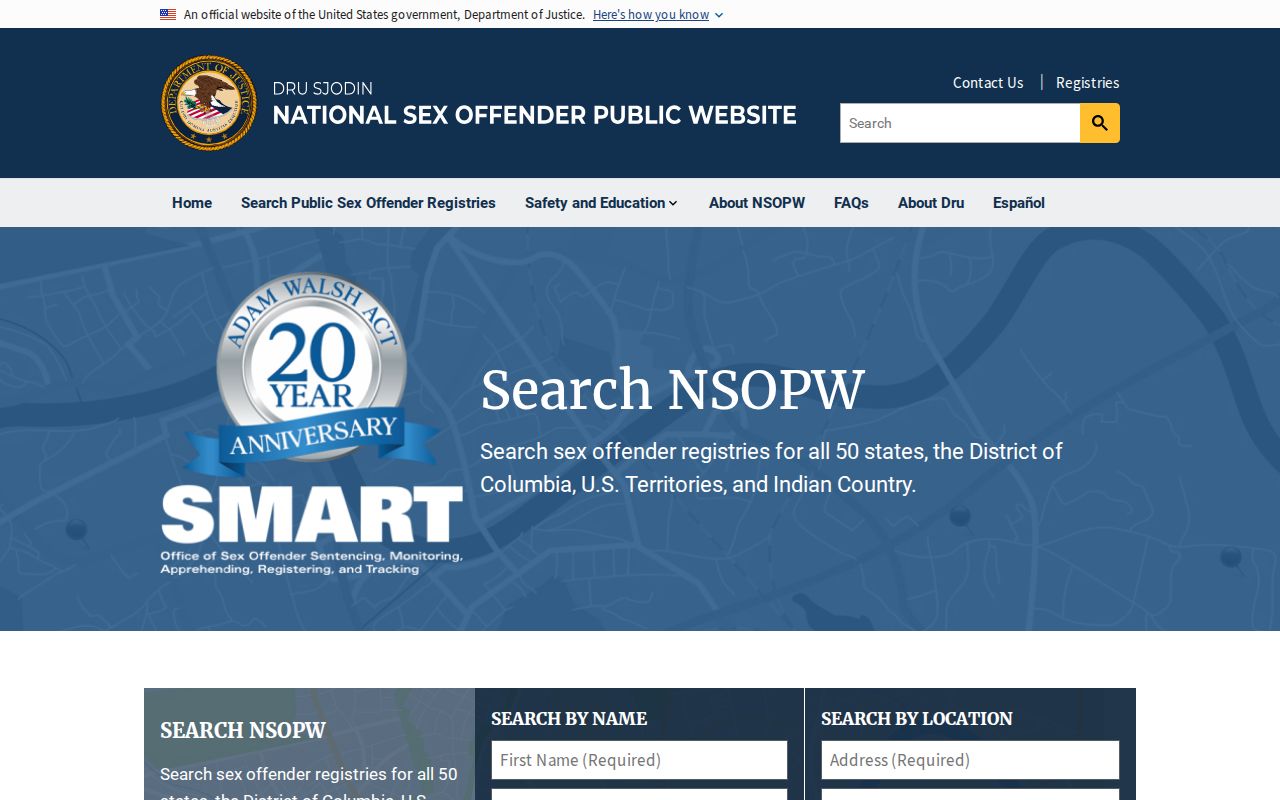
NSOPW is a second search layer, not a replacement for the Louisiana profile or the court of conviction.
What a Registry Profile Shows
A public profile can display statutory identity, address, offense, and compliance information. It is not a complete criminal case history, and the court of conviction remains the source for docket detail.
Read address labels literally. A residence, mailing address, work or school location, and other required address type should not all be called a home. A listed vehicle or physical marker can aid identification but may change. Verification dates give those fields needed context.
| Name & Aliases | Registrant name and reported aliases; do not assume aliases are different people. |
|---|---|
| Photo & Physical Description | Photo, age or birth presentation, height, weight, hair, eyes, and marks where public. |
| Registered Address | Residence and other address types required by law; a map pin can have geocoding limits. |
| Offense & Statute | Qualifying offense, jurisdiction, conviction date, and authorized victim-age category. |
| Level / Tier | Statutory tier and duration, not a personalized clinical risk score. |
| Registration Status | Compliance or other status and verification information; compliant is not a guarantee of conduct. |
Registration Requirements and Levels in Louisiana
Louisiana uses statutory tiers under R.S. 15:544. Tier I generally carries 15 years, Tier II 25 years, and Tier III lifetime registration. Juvenile, offense-specific, reduction, and lifetime rules can alter the general framework. Exact renewal frequency should be checked in the current statute rather than guessed.
| Level / Tier | Duration | Verification Frequency |
|---|---|---|
| Tier I | Generally 15 years | Periodic in-person renewal; verify current statutory schedule |
| Tier II | Generally 25 years | More frequent renewal; verify current statutory schedule |
| Tier III | Generally life | Most frequent renewal; verify current statutory schedule |
St. Tammany Registration and Verification
Louisiana law places in-person duties on registrants and local law enforcement. R.S. 15:542 generally requires specified information within three business days of establishing Louisiana residence unless an earlier rule applies. STPSO is the documented local registration and verification agency for parish residents outside municipal arrangements.
No official source reviewed supplied a current direct registration-unit counter, phone, hours, appointment rule, or a complete explanation of municipal coordination. A general sheriff address is not enough. Confirm those operational details with STPSO before directing an in-person visit, and do not assume that every municipal resident follows the same counter process.
The Louisiana DPS&C registry resource provides another official route to the state system.
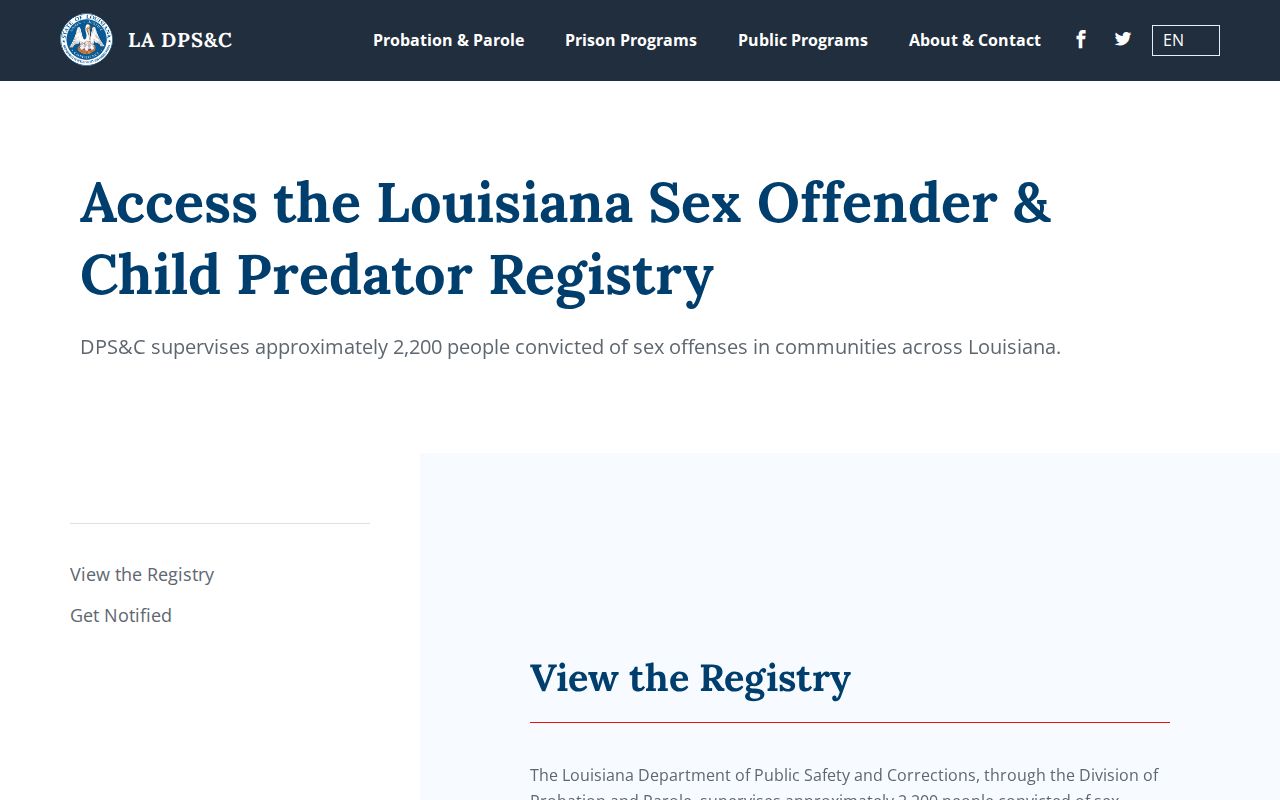
The page confirms the state registry channel but does not replace local verification of STPSO counter procedures.
Apparent Errors or Noncompliance in St. Tammany
When a profile seems wrong, note the official profile, date searched, and disputed field, then contact the registering sheriff or LSP. Do not publish a correction as fact, investigate a listed person, or confront a household. Source agencies can examine address type, update timing, identity, and status.
Suspected noncompliance also belongs with STPSO or LSP. A public searcher cannot determine from a map pin alone whether a statutory duty was violated. The official agency can compare nonpublic reporting and verification records that are not exposed on the public profile.
Lawful Use and St. Tammany Community Notification
The registry is a statutory awareness and notification tool. Use it to understand official information and support lawful safety planning. Louisiana registration and public-notification duties are governed in part by R.S. 15:542 and related provisions. The public profile should not be treated as permission to contact, follow, expose, or punish anyone.
A map marker can be imprecise, a status can update, and a conviction may come from outside Louisiana. Report a concern to authorities with the profile identifier and observed issue. Avoid circulating an altered screenshot or claim that goes beyond the official entry.
The registry does not answer whether someone has any criminal history. Registration is triggered by qualifying law, while other arrests and convictions belong in police, court, repository, or corrections records. That narrow purpose is why absence, tier, and compliance all require careful language.
Use registry data lawfully: Louisiana’s registry warns against using its information to harass, threaten, intimidate, or commit a crime against a registrant or household. Use information only as law permits.
For repeat awareness checks, use the same official criteria and record the date. A changed result may reflect an update, move, new verification, corrected location, or a different radius. The source agency, not a public guess, should explain a material discrepancy. Keep safety choices grounded in current official information and ordinary lawful precautions.
Use the official profile date and source identifiers when reporting any St. Tammany Parish registry concern to authorities.